
Gràcia is one of those Barcelona neighbourhoods that is well worth exploring without a map. Among its squares, narrow streets and historic buildings, urban art is woven into the everyday landscape: a painted shop shutter, a decorated façade, a garage door or a small mural can become a surprise along the way.
If you want to discover urban art in Gràcia, you will not necessarily find the huge walls that characterise other areas of Barcelona. Unlike the street art of Poblenou and the street art of El Raval, the charm of urban art in the Gràcia neighbourhood lies precisely in its variety and in the way the works coexist with shops, homes and community spaces.
The result is a different way of exploring Barcelona, perfect for those who want to discover the neighbourhood from an artistic perspective. In this street art Gràcia Barcelona guide, you will find a self-guided route and some recommendations to make the most of your visit.
What kind of urban art will you find in Gràcia?
Urban art in Gràcia does not follow a single style. Along the route, you can find everything from graffiti and lettering to illustrations, portraits, characters inspired by popular culture and more socially engaged compositions.
Shop shutters play an especially important role. Over the years, different artists have transformed these everyday elements into genuine works of art, creating a very particular relationship between art and commerce.
You will also find works that use humour, popular culture or social criticism as a starting point. This diversity makes the route much more unpredictable: two consecutive streets can showcase completely different artistic approaches.
And there is another characteristic to keep in mind: Gràcia's artistic landscape is constantly changing. One work may disappear while another takes its place, meaning that every walk can become a different experience.
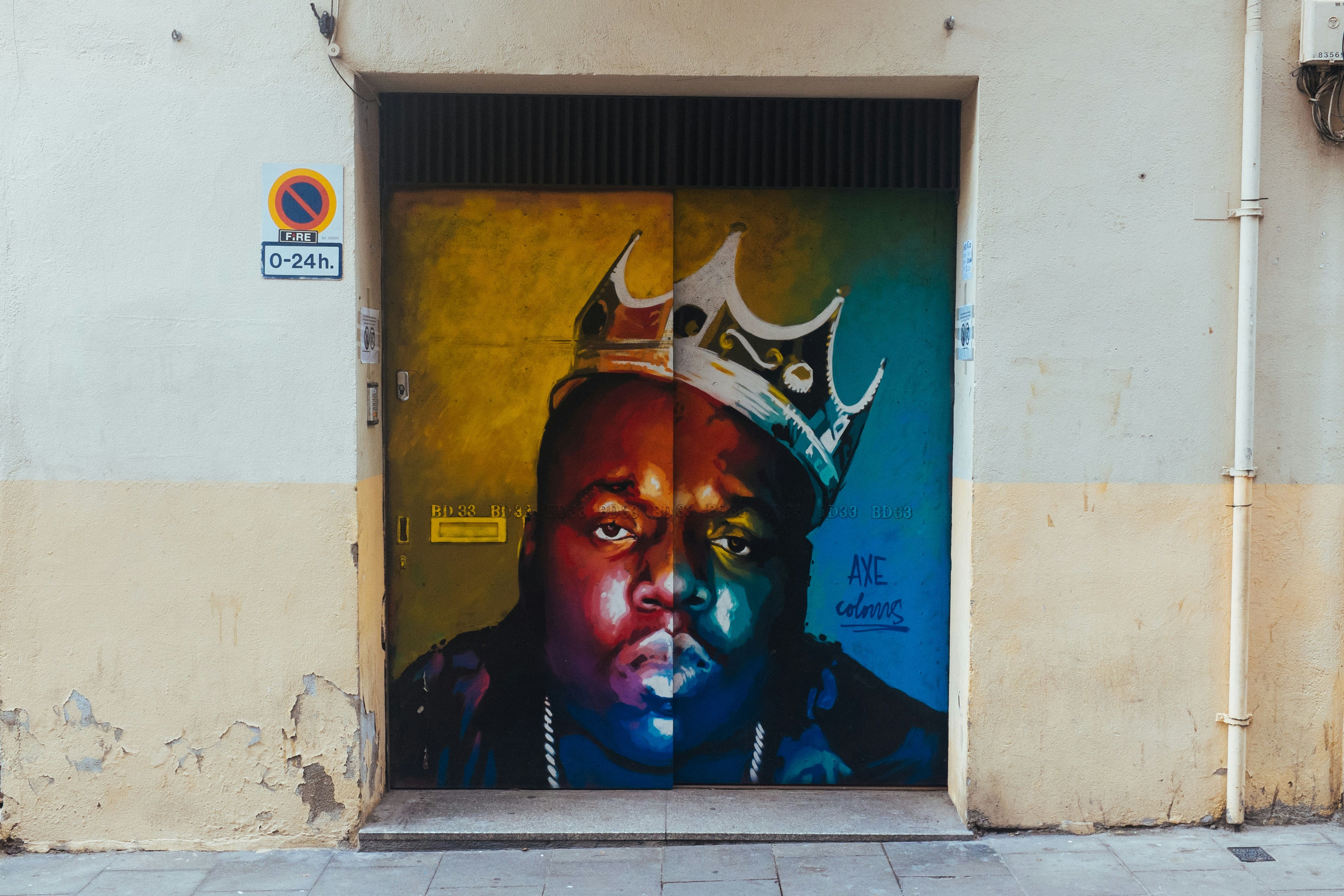
Self-guided route to discover Street Art Gràcia
This route can easily be done on foot and combined with a stroll through some of the neighbourhood's best-known squares and streets. We recommend allowing between one and a half and two hours, although you can take longer if you want to stop to photograph the works or explore the surrounding streets.
As urban art is ephemeral, some works may have changed or disappeared since they were documented. That transformation is precisely part of the experience.
1. Carrer de l'Encarnació
You can start the route on Carrer de l'Encarnació, one of the streets where interesting examples of urban art have historically been found.
One of the best-known examples is “Ladies & gentlemen” by Joel Arroyo, located at number 72. The work pays tribute to painter Tamara de Lempicka through large medallions decorating the entrance of a garage.
Arroyo's work is particularly recognisable for its portraits and the level of detail in his characters. This first stop therefore helps illustrate one of the characteristics of urban art in Gràcia: turning everyday spaces into canvases for highly distinctive works.
From here, you can continue towards the inner streets of the neighbourhood and start looking for other painted shutters and façades.
2. Carrer de les Guilleries
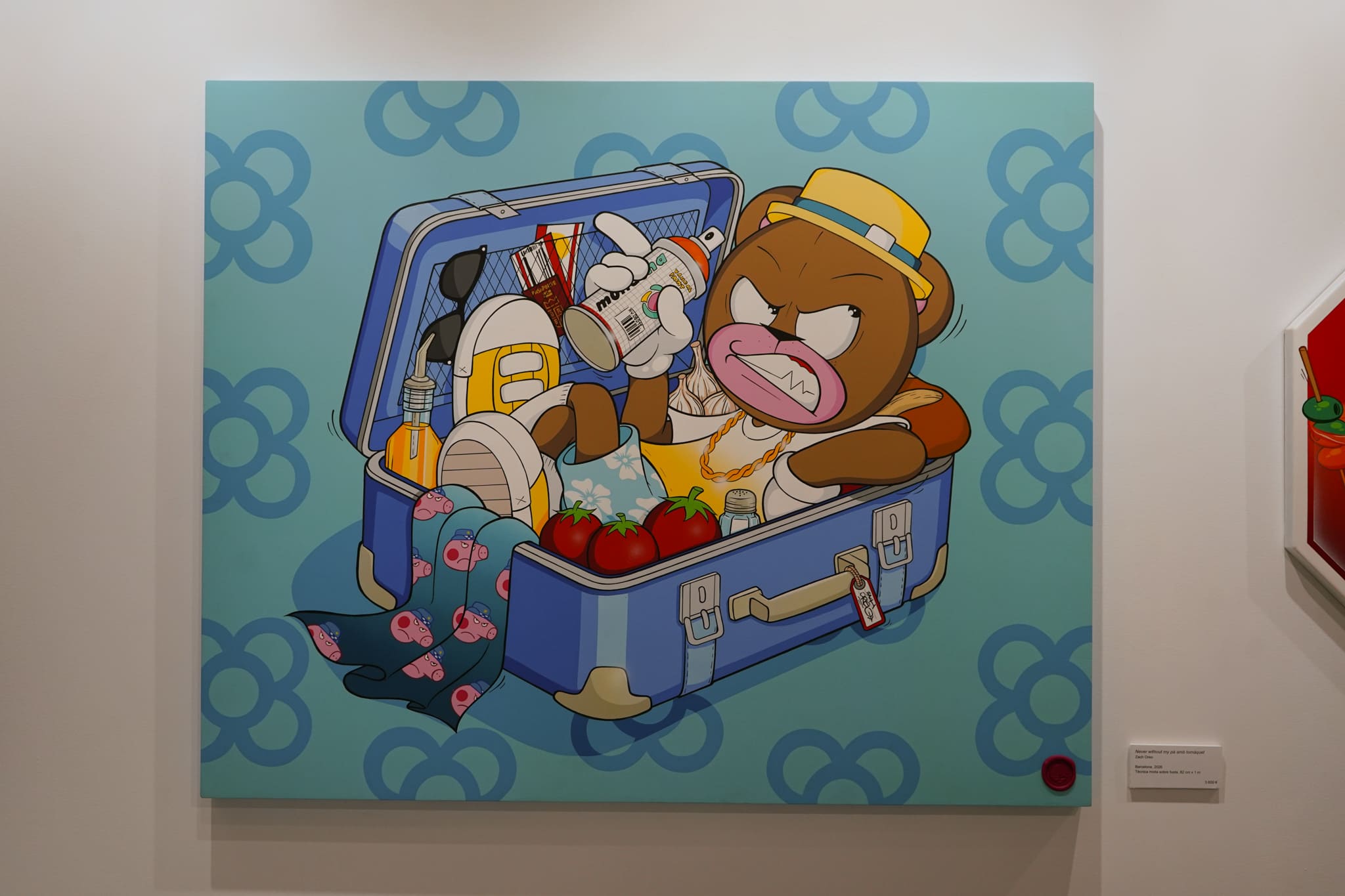
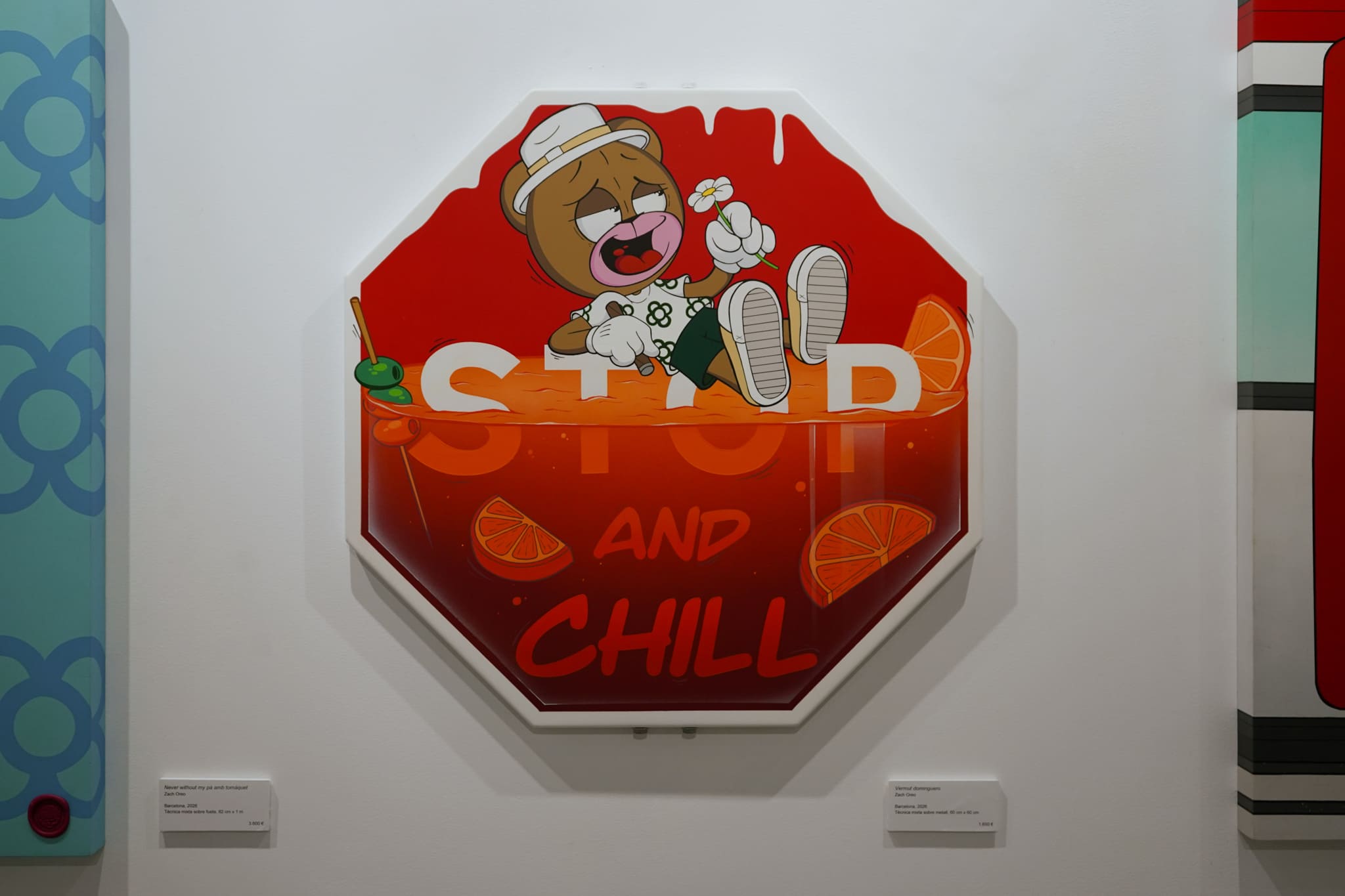
Continue towards Carrer de les Guilleries, a street that has been associated with different forms of street art and where works by artist Zach Oreo have been documented.
His work stands out for comic-inspired characters and compositions that combine different references from popular culture. It is a good example of how Gràcia's street art is not limited to large murals, but also appears in smaller formats that are easy to overlook.
In addition, if you want to discover more about this artist's work, you can currently visit a temporary exhibition by Zach Oreo at the Barcelona Street Art Museum (BAS). The exhibition allows you to discover his artistic universe in a gallery setting and see his distinctive style up close, beyond the interventions you can find on the streets of Barcelona.
3. Carrer de Ventallat
One of the best-known stops on this route is Carrer de Ventallat, where different urban art works have been concentrated.
At number 10, you will find a space associated with an urban garden that has hosted different murals. This area was also home to one of Axe Colours' best-known works: a portrait of Walter White, the Breaking Bad character, created in a hyperrealist style. At number 2 on the same street, a portrait of Daenerys Targaryen from Game of Thrones was also documented.
These are perfect examples of the popular character of street art in Gràcia, where recognisable characters can become the protagonists of large spray-painted compositions.
That said, before setting out specifically to look for a particular work, remember that murals may have been modified or covered.
4. Torrent de l'Olla and surrounding streets
Continue the route along Torrent de l'Olla, one of the neighbourhood's main commercial thoroughfares. Walking along this street reveals another distinctive feature of urban art in Gràcia: its close relationship with local businesses.
At different times, murals and decorated shutters could be found in this area, along with small details appearing on the surrounding streets.
Do not limit yourself to the main street. Take a detour through Bonavista, Perla, Puigmartí or the smaller streets connecting with Torrent de l'Olla, because many of the most interesting interventions appear precisely in these secondary spaces.
Gràcia's architecture also makes the walk part of the experience. The neighbourhood retains a layout of relatively narrow streets and numerous squares and commercial thoroughfares, creating a setting very different from the large industrial spaces of Poblenou.
5. Travessera de Gràcia and the open walls
The final part of the route can take you towards Travessera de Gràcia, where there have also been spaces dedicated to artistic interventions.
One of them, located at number 104, has hosted murals created as part of urban art initiatives. In 2024, for example, a pointillist mural related to the situation of children in Gaza was documented there. The work was subsequently subject to several interventions and modifications, once again demonstrating the changing nature of these types of spaces.
These types of walls show another dimension of street art in Gràcia: in addition to decorating the neighbourhood, urban art can become a tool for expressing social messages, causes and ideas from different groups.
Urban art outdoors and urban art in a museum
The streets of Gràcia offer a glimpse into the most spontaneous and ever-changing side of the urban art movement. However, if you want to explore other ways of understanding street art, Barcelona also has spaces specifically dedicated to this movement.
The Barcelona Street Art Museum (BAS) houses a collection of works by some of the most famous street artists, both national and international, and allows visitors to see pieces that, unlike many interventions created on the street, are protected inside an exhibition space.
A visit can perfectly complement a route through Gràcia. On the streets, you discover the spontaneous and ephemeral nature of urban art; at BAS, you can take your time with the works and learn more about different artists, techniques and styles.
If you are enjoying a cultural getaway in Barcelona, combining both experiences will allow you to approach street art from two different perspectives.
How to prepare your Street Art route through Gràcia
Before you set off, there are a few small details that can greatly improve the experience:
Allow at least a couple of hours if you want to walk around at a relaxed pace and take photographs.
Wear comfortable shoes: although the distances are not huge, you will probably end up walking along more streets than expected.
Do not rely solely on Google Maps. Some works may not be signposted and others may have disappeared.
Bring your camera or phone with enough battery. In Gràcia, photo opportunities appear constantly.
Take the opportunity to explore the side streets. Urban art is not always found on the main roads.
If you photograph shops or private spaces, always do so while respecting local residents and property owners.
Remember that a work featured in a guide may have changed. The current state of each mural may be different.