More than 25 years of Centre Sant Jaume
Centre Sant Jaume is a non-profit organisation founded in 1997 in Badalona. It works towards the education and the human, social and cultural development of children, young people and families in situations of vulnerability or at risk of social exclusion.
Its team is made up of professionals from the socio-educational field —social educators, pedagogues, psychologists, social workers— as well as volunteers who actively take part in the project.
Its origins date back to 1995, with the creation of the Carles Blanch Foundation, promoted by several organisations linked to the Sant Ignasi de Sarrià School. This project was born as an educational initiative with a social vocation, inspired by the legacy of Carles Blanch i Xiró.
In 1996, they began running a Centre Obert (Open Centre) in the Gorg neighbourhood of Badalona, with the aim of promoting social justice through education for children at risk of social exclusion.
Over the years, they have expanded their spaces and developed a range of projects to respond to the needs of the local community, such as educational support programmes, prevention of school absenteeism, youth mentoring, and employment integration initiatives.
Today, they continue to work with a strong social commitment, focusing their efforts on supporting people and contributing to the building of a more just and inclusive society.
The cultural project with BAS
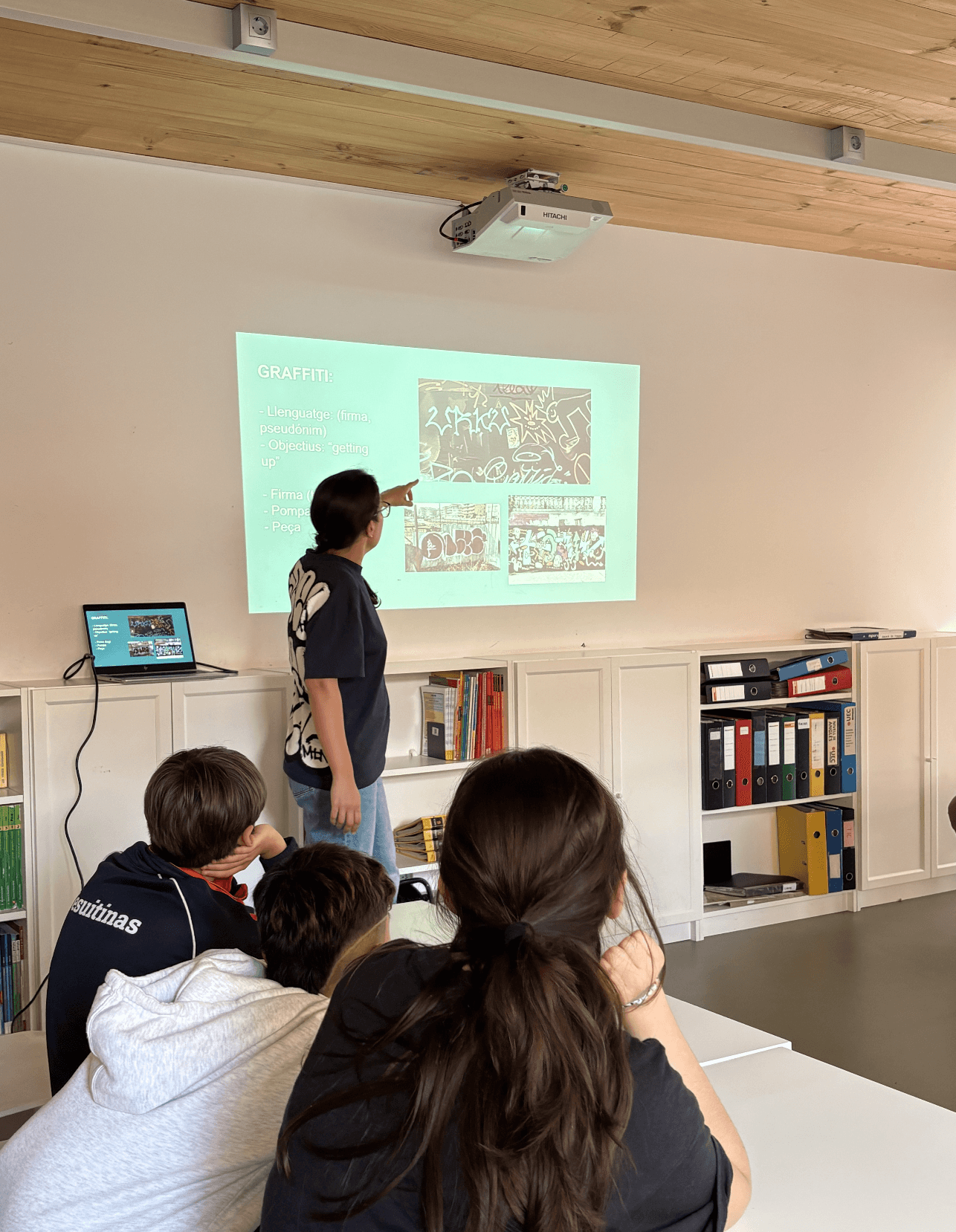
We are currently developing a collaborative artistic project with Centre Sant Jaume in Badalona, together with a group of teenagers from the centre. This project, structured over approximately five sessions, begins with an initial meeting aimed at introducing participants to the world of graffiti and urban art in Barcelona, bringing them closer to its history, visual languages, and some of the city’s most representative urban artists. This first approach allows young people to understand urban art not only as a form of artistic expression, but also as a tool for communication, identity, and social transformation.
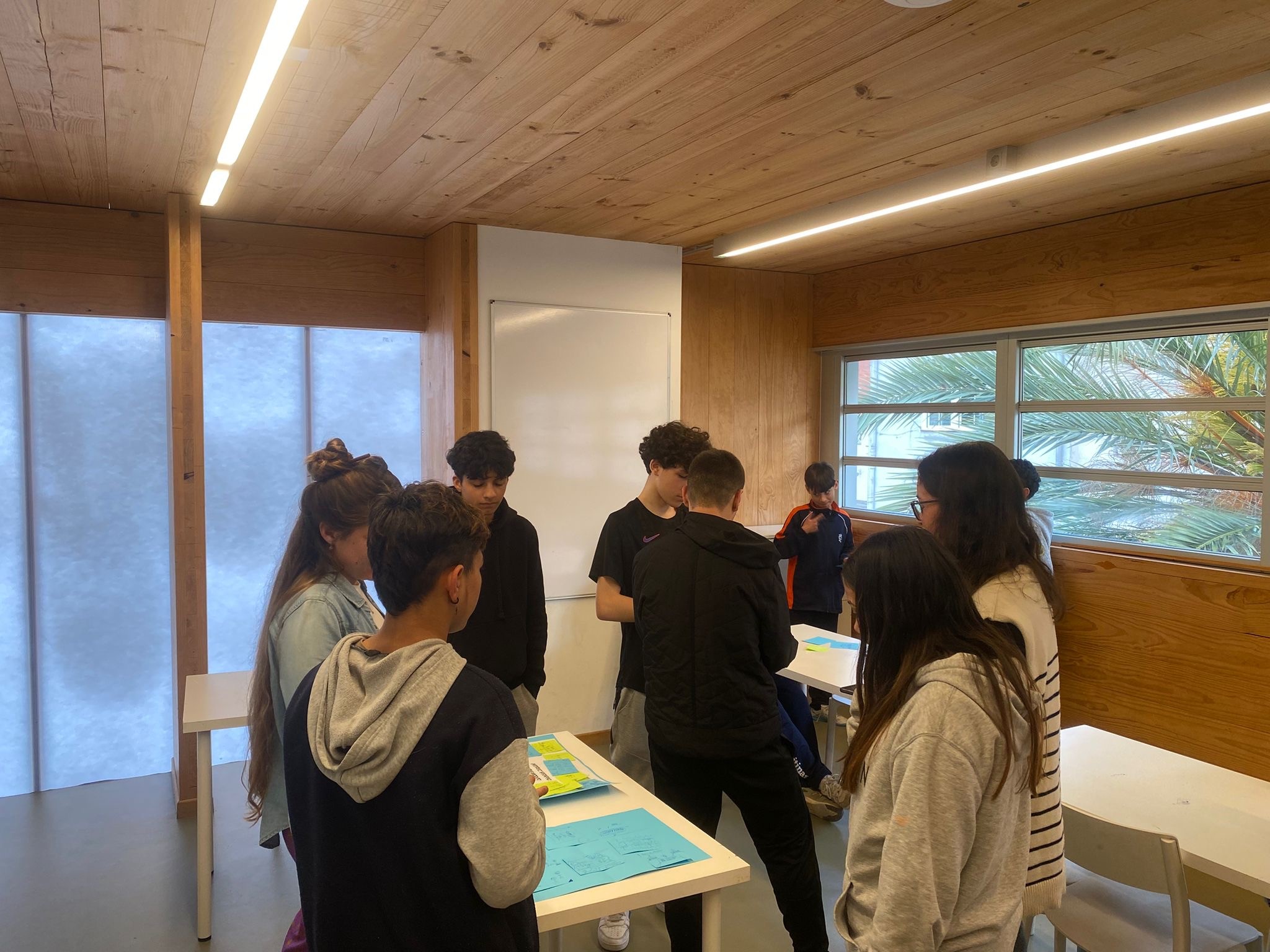
In a second phase, a participatory dynamic of reflection and brainstorming is developed around the values, learning experiences and day-to-day realities of the centre. In this working space, young people not only talk and share ideas, but also immediately translate them into drawings and initial sketches, turning thought into visual representation. From this process, key concepts emerge linked to the identity of Centre Sant Jaume and its educational and social work: human support, care, listening, inclusion, social justice, protection, respect, and the commitment that no one is left behind or loses their path. Based on this graphic and conceptual material generated by the participants, the artist develops an initial sketch that directly builds on the young people’s drawings and ideas, establishing a clear link between their perspective and the final proposal.
This process culminates in the creation of a mural painting designed for one of the centre’s indoor spaces, chosen collaboratively by the educational team, the participating young people and the artist, with the aim of ensuring that the artwork is fully integrated into their everyday environment and becomes a living representation of the community that inhabits it. Beyond its aesthetic dimension, the mural is intended to give a voice to educational and social work that often goes unnoticed, becoming a visual space capable of communicating, engaging and conveying values to all who encounter it.
In the following sessions, participants take an active role in creating the mural alongside the artist Camil Escruela, who supports the entire creative process and is responsible for the final finishes, the definitive lines and the last touches of the piece. As a closing activity, the young people also experiment with spray techniques by applying them to T-shirts, creating a personal and identity-based piece that they can wear during centre activities and outings, turning the artistic experience into a shared memory and an extension of the values developed collectively.
We will continue to update the photographs as the project progresses.