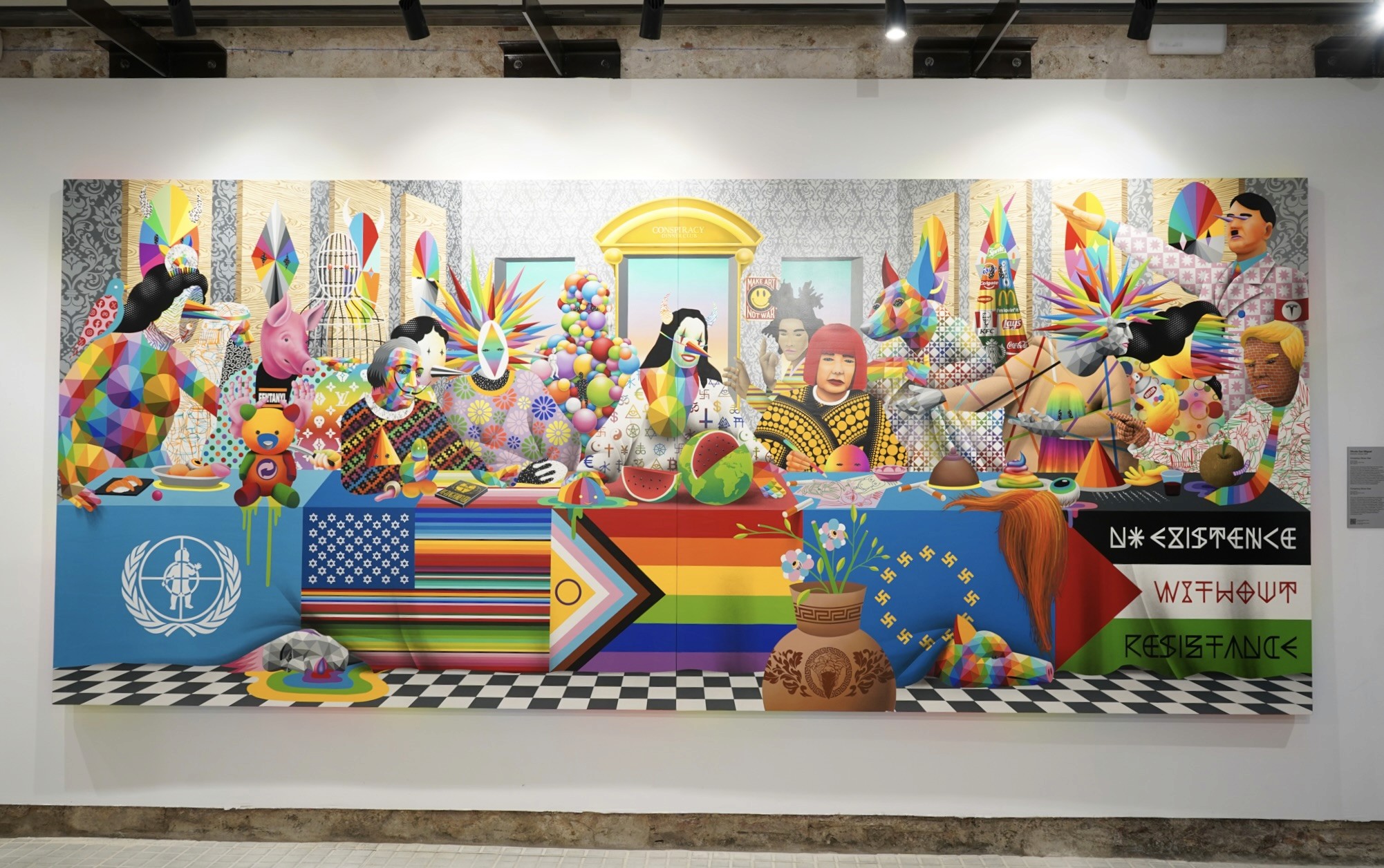
Few contemporary artists have transformed the urban art scene quite like Okuda San Miguel. Known for his unmistakable use of vibrant geometric shapes, multicoloured animals, and surreal imagery, Okuda San Miguel has become one of the most recognisable names in modern street art. His work can be found on walls, buildings, sculptures, galleries, and public spaces around the world, including at BAS, where visitors can discover works by the artist alongside a curated collection of contemporary urban art. His creations continue to attract art lovers, photographers, and travellers alike.
But who exactly is Okuda San Miguel, what makes his work unique, and where can you experience his creations in person? This guide explores the artist's journey, signature style, and some of the best places to discover Okuda art.
Who is Okuda San Miguel?
Okuda San Miguel is a Spanish contemporary artist born in Santander in 1980. He began creating art in the late 1990s, initially focusing on graffiti and urban interventions. Over time, his work evolved into a distinctive visual language that combines street art, surrealism, pop culture, geometry, and symbolism.
Today, Okuda San Miguel is internationally recognised for transforming ordinary spaces into colourful landmarks. His large-scale murals and installations can be found across Europe, North America, Asia, Africa, and the Middle East.
One of the reasons Okuda San Miguel has achieved global success is his ability to blend accessibility with deeper meaning. While his artworks are visually striking and immediately recognisable, they often explore themes such as identity, freedom, consumerism, diversity, spirituality, and environmental awareness.
What makes Okuda art unique?
The first thing people notice about Okuda art is its explosive use of colour. Bright geometric patterns dominate his compositions, often covering human faces, animals, and architectural elements.
His work frequently features:
Multicoloured geometric faces
Animals with symbolic meanings
Surreal landscapes
Fantasy-inspired imagery
References to different cultures and religions
Large-scale public murals
The geometric patterns seen throughout Okuda San Miguel art have become the artist's signature. These shapes create a futuristic aesthetic while also representing the diversity and complexity of human identity.
Another defining characteristic of Okuda art is its ability to transform forgotten or abandoned spaces. Rather than simply decorating walls, the artist often reimagines entire environments, turning them into immersive cultural experiences.
The famous Kaos Temple project
One of the most iconic projects by Okuda San Miguel is the transformation of an abandoned church in Asturias, northern Spain.
Known as the Kaos Temple, the project converted the former church into a colourful indoor skatepark covered in the artist's geometric designs. The contrast between the traditional religious architecture and the vibrant contemporary artwork attracted worldwide attention.
Images of the Kaos Temple quickly spread across social media and international media outlets, helping establish Okuda San Miguel as one of the most influential urban artists of his generation.
Although the skatepark later closed, the project remains one of the most celebrated examples of how art can breathe new life into historic spaces.
Where can you see Okuda San Miguel art?
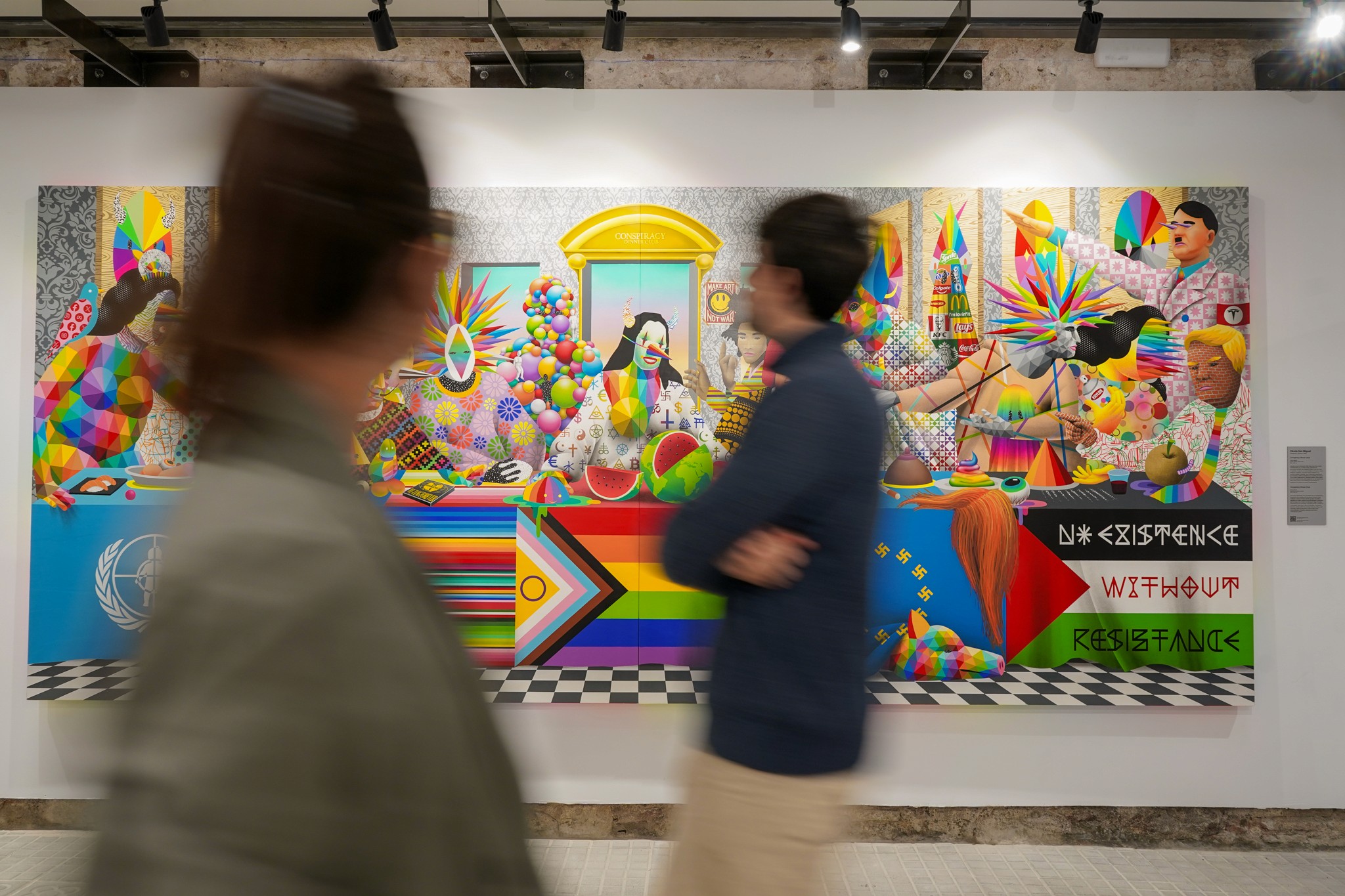
If you're looking to experience Okuda San Miguel art in person, one of the places where you can see his work is at the BAS Museum in Barcelona. Dedicated to celebrating contemporary urban and street art, BAS showcases works by internationally recognised artists, including Okuda San Miguel.
Visitors to the museum can explore pieces that reflect the artist's distinctive visual language, characterised by bold geometric patterns, vibrant colours, and surreal imagery. Seeing Okuda art up close offers a unique opportunity to appreciate the detail, scale, and symbolism that have made him one of the most influential figures in contemporary urban art.
International murals
Beyond Spain, Okuda San Miguel has created artworks in numerous countries around the world.
His murals can be found in:
France
Germany
Portugal
United Kingdom
United States
Japan
India
South Africa
Morocco
Each project adapts to its surroundings while maintaining the unmistakable visual identity that defines Okuda art.
Exhibitions and sculptures
In addition to murals, Okuda San Miguel regularly exhibits sculptures, installations, and canvas works in galleries and museums.
These exhibitions allow visitors to engage with the artist's work beyond public street art and gain a deeper understanding of his creative process.
Because Okuda San Miguel art spans multiple mediums, every exhibition offers a different perspective on his evolving artistic vision.
The cultural impact of Okuda San Miguel
Over the past two decades, Okuda San Miguel has played a significant role in elevating urban art within the contemporary art world.
What was once considered a niche artistic movement has gained mainstream recognition, partly thanks to artists like Okuda San Miguel, who successfully bridge the gap between street culture and fine art.
His projects often attract visitors from around the world, generating cultural interest and tourism in the areas where they are located. By transforming public spaces into vibrant works of art, he demonstrates how creativity can revitalise communities and create new cultural landmarks.
The influence of Okuda art can also be seen in collaborations with brands, festivals, museums, and public institutions, further expanding the reach of contemporary urban art.
Why is Okuda San Miguel so popular?
The popularity of Okuda San Miguel stems from a combination of artistic originality, accessibility, and global appeal.
His work resonates with audiences because it is:
Visually striking
Easy to recognise
Rich in symbolism
Optimistic and colourful
Suitable for both public spaces and galleries
Whether someone is an experienced art collector or simply encounters a mural while travelling, Okuda San Miguel art creates an immediate emotional impact.