
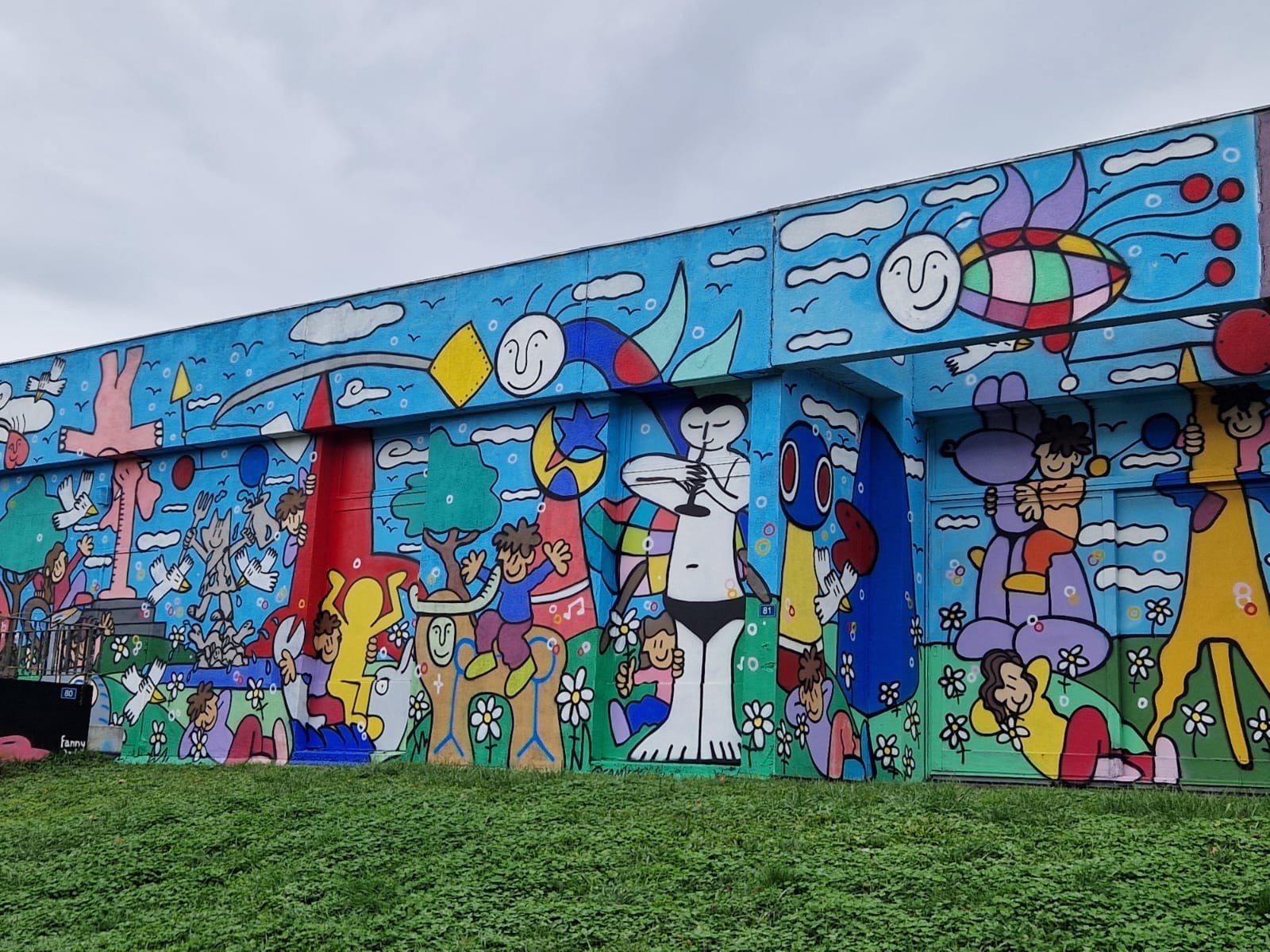
Street art is everywhere. You can find it on massive building facades, hidden alleyways, abandoned factories, train bridges, shutters, and city walls. Sometimes it appears overnight. Sometimes it stays for years and becomes part of a neighborhood’s identity.
But despite seeing it constantly, many people still ask the same question:
What is street art?
Is it graffiti? Is it vandalism? Is it public art? Or is it something entirely different?
The truth is that street art is one of the most powerful and misunderstood forms of contemporary expression. And in cities like Barcelona, it has become an essential part of urban culture.
So…what is it exactly?
Street art is a form of visual art created in public spaces. Unlike traditional art displayed inside galleries or museums, street art exists directly in the streets and interacts with everyday life.
When people search for “street art what is it”, they are usually surprised to discover that it includes much more than graffiti. Street art can involve murals, stencil work, paste-ups, stickers, installations, typography, projections, and many other techniques.
At its core, street art transforms public spaces into places of creativity and communication.
Some artists use it to make political statements. Others use it to bring beauty to forgotten places, express emotions, tell stories, or challenge social norms.
And unlike traditional art, street art is accessible to everyone. You do not need a ticket or an invitation to experience it. You simply walk through the city and encounter it unexpectedly.
What is urban art?
Many people also ask: what is urban art?
The terms “urban art” and “street art” are often used interchangeably, but there are subtle differences.
Urban art is a broader concept that includes artistic expressions connected to city life and urban culture. Street art is part of urban art, but urban art can also include works created inside galleries, museums, exhibitions, or cultural spaces inspired by street aesthetics and city environments.
In other words:
Street art is usually created directly in public spaces.
Urban art includes street art but can also exist beyond the streets.
Today, many artists move fluidly between walls, galleries, museums, and digital spaces. This evolution has helped urban art become one of the most influential artistic movements of the 21st century.
What is a mural?
One of the most common forms of street art is the mural.
A mural is a large artwork painted or applied directly onto a wall or ceiling. Murals can be found both indoors and outdoors, but in street art culture, they are often associated with large-scale public artworks visible throughout cities.
When people ask “what are mural paintings”, they are usually referring to these large visual pieces that transform buildings into artistic landmarks.
Murals can be:
political
abstract
realistic
community-driven
decorative
experimental
Some murals tell stories about the neighborhood where they are located. Others address social issues, identity, climate change, migration, or inequality. Some simply exist to create beauty and emotion within urban environments.
In many cities, murals have become cultural symbols and major tourist attractions.
What is street art called?
The answer depends on the style, technique, and context.
Street art can include:
graffiti
murals
stencil art
wheatpaste art
tagging
sticker art
installations
urban interventions
Although many people use “graffiti” and “street art” as if they were the same thing, they are not exactly identical.
Graffiti traditionally focuses more on lettering, tags, and writing styles, while street art often incorporates illustrations, concepts, and visual storytelling. However, the two movements are deeply connected and frequently overlap.
Today, the term “street art” is commonly used to describe contemporary artistic interventions in public spaces.
Why street art matters
Street art matters because cities are more than buildings and streets. They are emotional, cultural, and political spaces shaped by the people who live in them.
Street art gives cities personality.
It creates dialogue. It makes people stop, think, question, and feel. Sometimes it brings attention to social issues. Sometimes it gives visibility to voices that are ignored in traditional cultural spaces.
Unlike many forms of art that exist inside institutions, street art is immediate and public. It belongs to the rhythm of everyday life.
That is also why street art often generates debate.
Some people see it as creativity and cultural expression. Others see it as disorder or vandalism. But regardless of opinion, street art has become impossible to ignore.
From New York to Berlin, London, São Paulo, and Barcelona, urban art has transformed the way people experience cities.
Where to find street art
One of the most exciting things about street art is that it is constantly changing. A mural that exists today may disappear tomorrow, replaced by another artist or another message.
This temporary nature is part of what makes street art special.
Barcelona: an open-air urban art gallery
Barcelona is one of Europe’s most important cities for street art and urban creativity. Although regulations around public interventions have become stricter in recent years, the city continues to have a strong urban art culture.
Some of the best areas to discover street art in Barcelona include:
Poblenou
Known for its industrial atmosphere and massive murals, Poblenou has become one of the city’s most iconic urban art neighborhoods. Large warehouse walls and abandoned factories have turned into canvases for local and international artists.
El Raval
El Raval combines street art, multiculturalism, music, skate culture, and contemporary creativity. Walking through its streets often feels like exploring a constantly evolving outdoor gallery.
Gràcia
Gràcia offers a more hidden and local street art scene, filled with smaller interventions, artistic shutters, stickers, and independent creative spaces.
Urban art museums and galleries
Street art is no longer limited to public walls. Today, many museums and galleries also celebrate urban art and contemporary street culture.
Spaces like BAS aim to help people understand urban art beyond stereotypes by connecting the energy of the streets with deeper cultural conversations.
The future of street art
Street art continues to evolve.
Artists now combine traditional spray paint techniques with digital art, installations, projections, sculpture, animation, and mixed media. Social media has also transformed the movement, allowing murals and interventions to reach millions of people worldwide within hours.
At the same time, many cities continue debating how public space should be controlled, regulated, and used.
This tension is part of the DNA of street art itself.
It exists between freedom and restriction, permanence and disappearance, rebellion and recognition.
And perhaps that is exactly why people continue to be fascinated by it.
Because street art is not just about painting walls.
It is about transforming the way we see the city around us.