
When we talk about Spanish urban art, there are names that have managed to take the language of the street far beyond the walls. One of them is Escif, a Valencian artist known for his interventions filled with irony, social criticism and messages that invite us to look at reality from a different perspective. At BAS Museum, in Barcelona, you can discover one of his works alongside pieces by other major names in contemporary street art, in a journey that allows visitors to get closer to the creative universe of these artists.
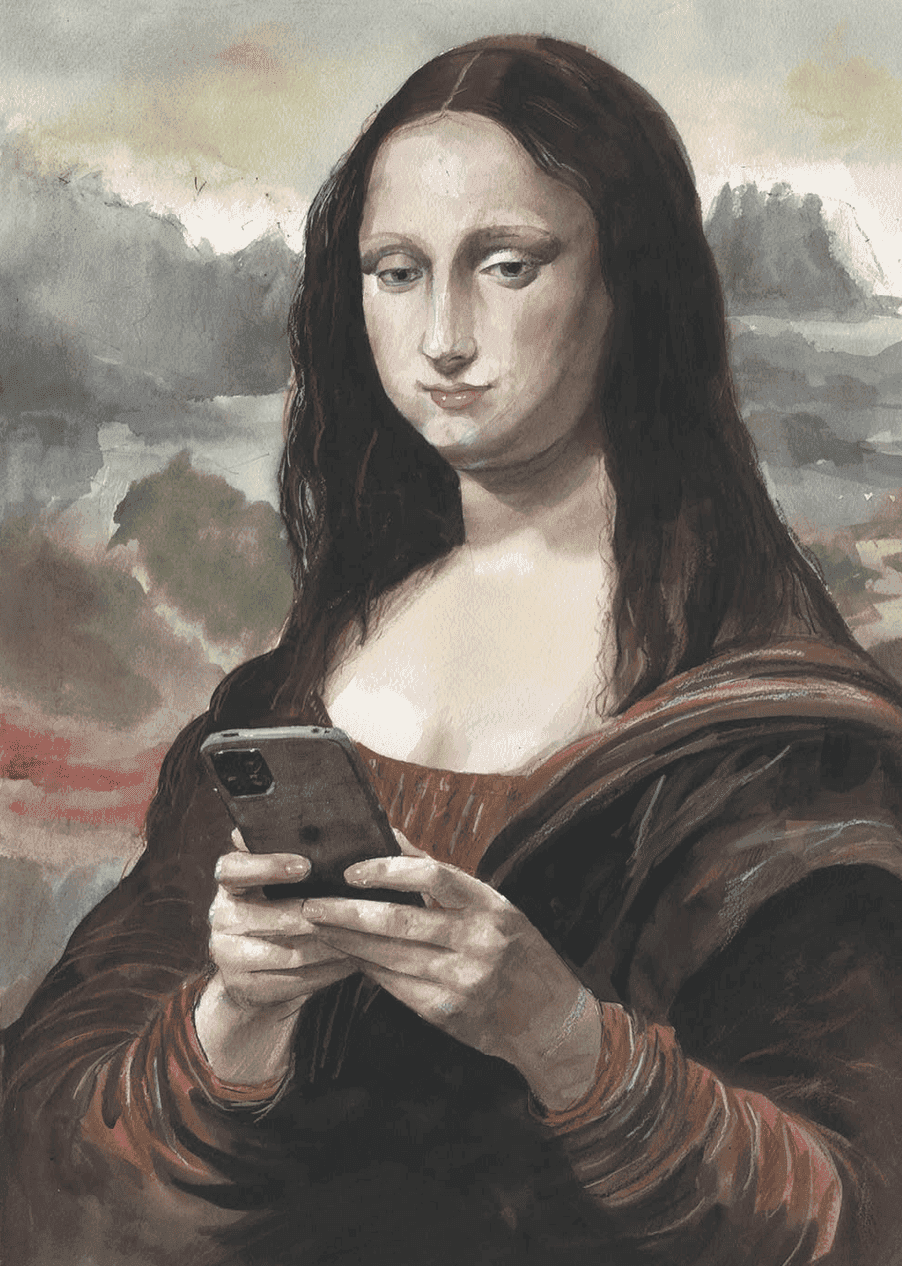
Unlike other urban artists who seek to surprise with large explosions of colour or monumental compositions, Escif relies on simple ideas, symbolic images and concepts that hide much more than meets the eye. His work has been seen in different cities around the world and is part of the evolution of street art towards increasingly conceptual forms of expression.
(Image credit: Escif (@escif) / Instagram.)
Who is Escif?
Escif is the artistic name of a Valencian artist who began developing his work in Valencia’s urban art scene during the 1990s. His early work was connected to graffiti, although over time his artistic language evolved towards much more conceptual interventions and murals.
Trained in Fine Arts and closely connected to Valencia’s artistic scene, Escif has developed a distinctive visual identity in which humour, irony and social criticism play a fundamental role.
His work addresses issues related to power, consumerism, social inequalities, politics and the relationship between people and their surroundings. However, he rarely offers an obvious answer. His images function more as questions than statements.
For this reason, although he is often associated with graffiti and street art, reducing his work solely to these categories would be missing much of the picture.
(Image credit: Escif (@escif) / Instagram.)
What characterises an Escif mural?
Recognising an Escif mural is not always easy at first glance. His aesthetic is often deliberately restrained and avoids some of the most common features of contemporary muralism.
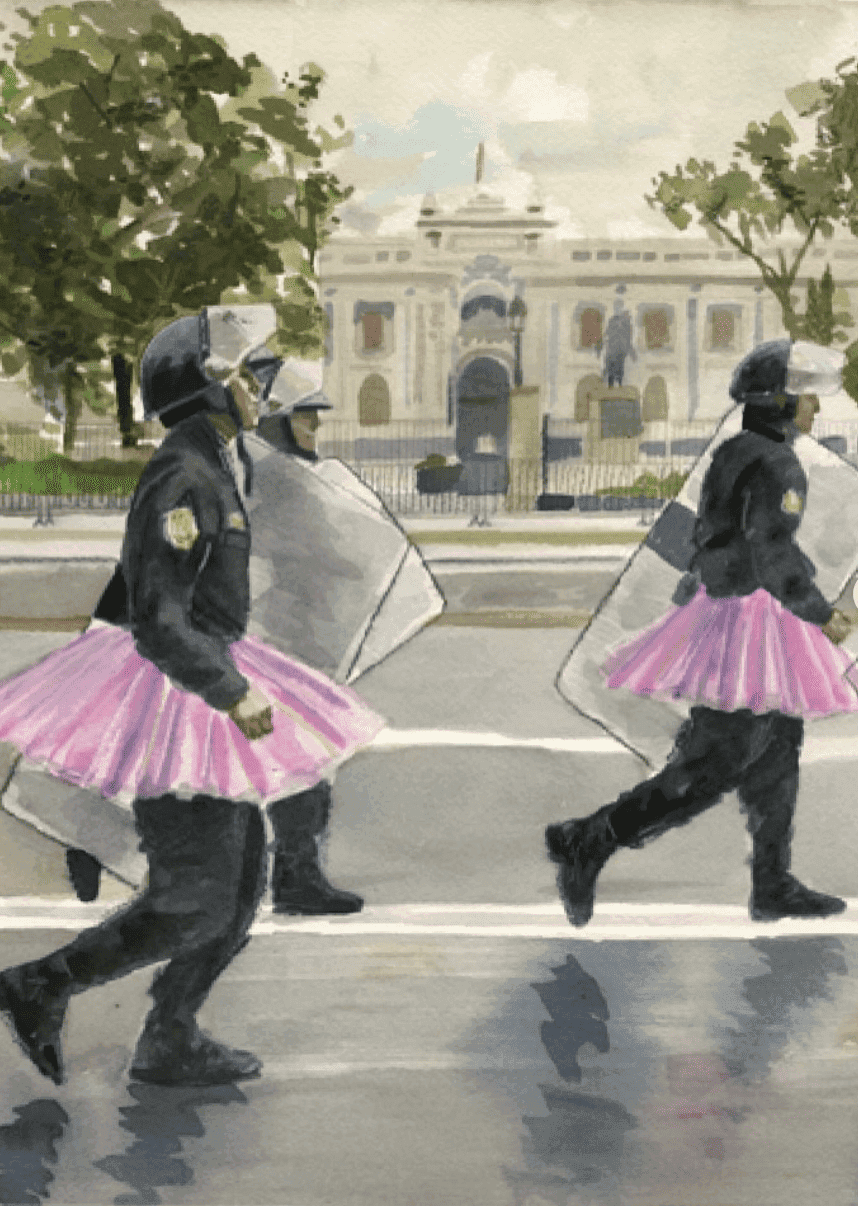
Instead of filling a wall with colours, details or monumental characters, the artist may use a seemingly simple figure to convey a much more complex idea.
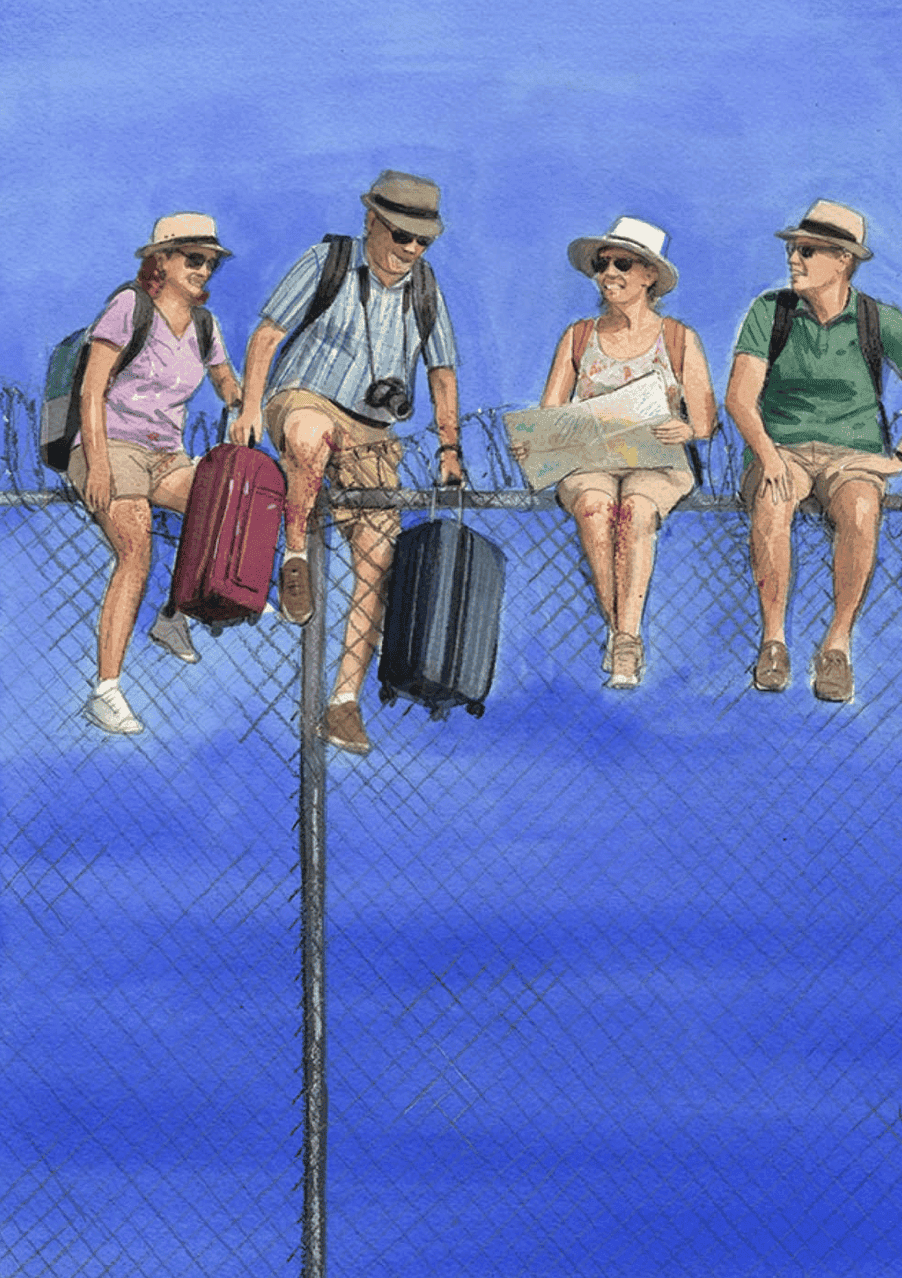
Irony is one of his main tools. An everyday object, a domestic scene or an apparently innocent action can acquire a completely different meaning when transferred onto a façade.
It is also common to find references to social and political events. Context is essential when interpreting many of his works: an image can acquire new meanings depending on where it appears and the historical moment in which it was created.
This ability to engage in a dialogue with its surroundings is precisely one of the characteristics that make Escif’s work such an interesting example of contemporary urban art.
(Image credit: Escif (@escif) / Instagram.)
Is Escif the “Spanish Banksy”?
Escif has sometimes been described as the “Spanish Banksy”, a comparison that also appears in content about some of the best-known urban artists.
The comparison is understandable because both use public space to raise social and political issues and because they maintain an artistic identity that is much more important than their media presence.
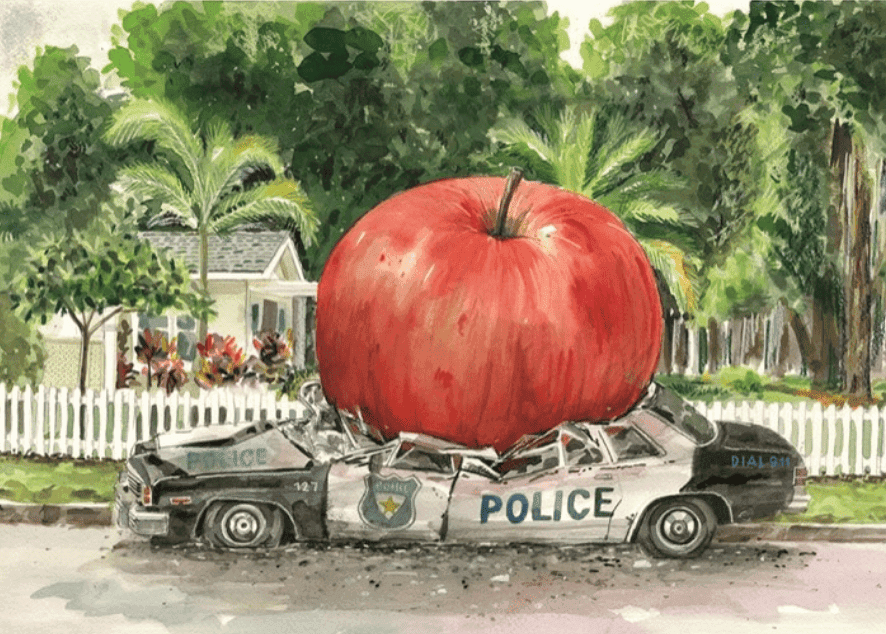
However, Escif has his own visual language. His work does not simply seek to reproduce the Banksy model, but rather to explore other forms of irony, symbolism and criticism.
(Image credit: Escif (@escif) / Instagram.)
Where can you see Escif’s works?
One of the best ways to discover Escif’s work is to visit cities where he has created interventions, particularly Valencia and other places that are part of the international urban art scene.
However, there is one problem: street art is ephemeral. Buildings are renovated, walls are repainted and many works disappear over time.
That is why museums dedicated to urban art play an increasingly important role in preserving these creations.
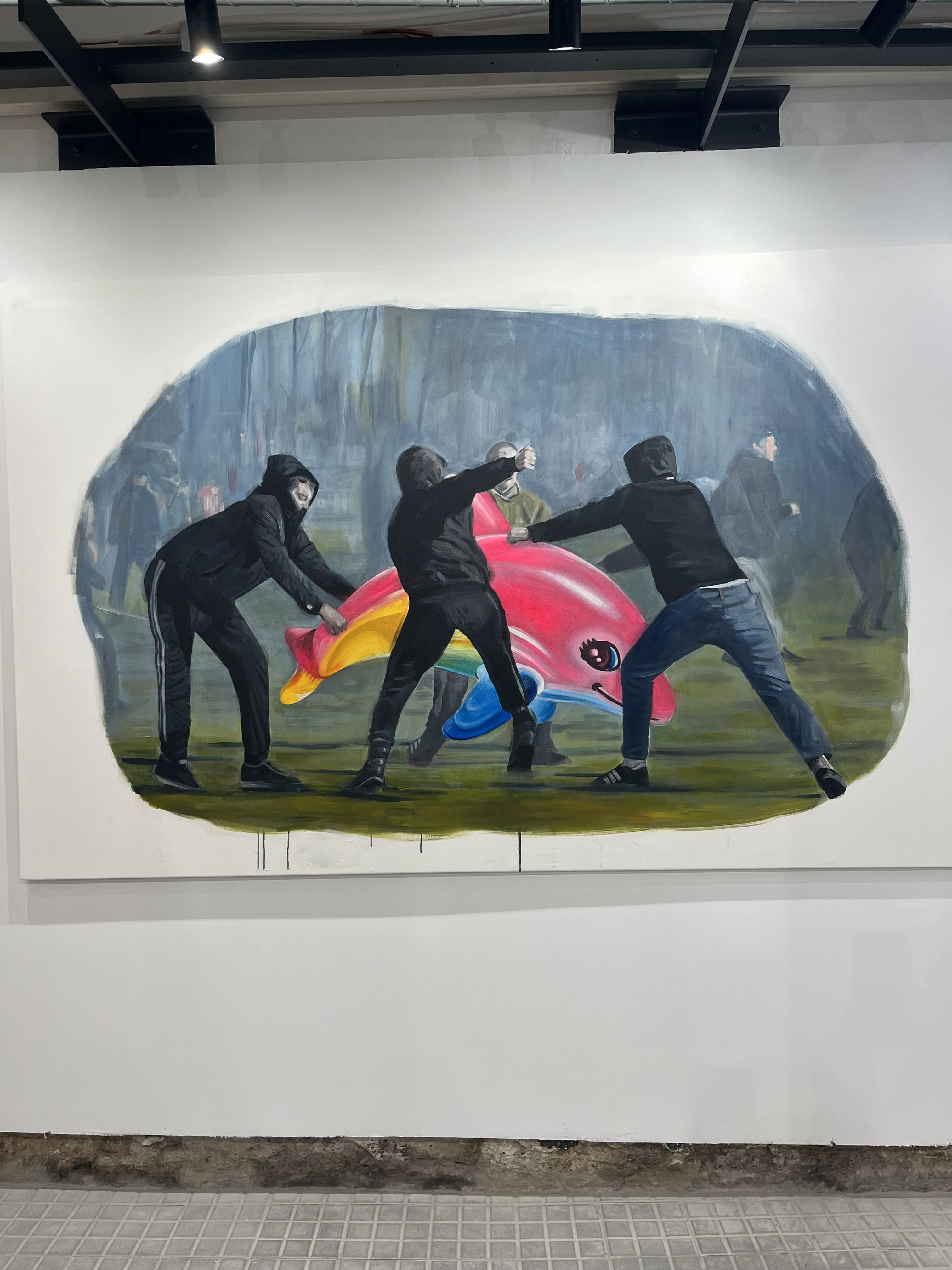
In Barcelona, one option for getting closer to Escif’s work is BAS Museum, where his work forms part of a permanent collection alongside pieces by artists such as Okuda San Miguel, Felipe Pantone, Aryz, Pichiavo, Vhils, Bordalo II, Sixe Paredes and Mina Hamada.
Seeing an Escif work inside a museum also allows visitors to notice something that can go unnoticed when viewing a mural from the street: the details, the technique and the relationship between the work and the rest of the artist’s production.
(Image credit: Escif (@escif) / Instagram.)
Escif and contemporary urban art
Escif’s career reflects how urban art has evolved over the past few decades. What began in many cities as an expression primarily associated with graffiti has eventually made its way into museums, galleries and permanent collections.
This transformation can also be seen in institutions such as IVAM, in Valencia, and in specialised spaces such as BAS, which help contextualise different forms of contemporary creation connected to the city.
In this new context, artists like Escif demonstrate that a wall can be much more than a surface to paint on.
It can become a question, a criticism, a joke or even a small story.
And perhaps that is a large part of Escif’s appeal: his works do not need to shout to capture our attention. Sometimes, all it takes is a simple image to make us stop, look twice and wonder what it is trying to tell us.
For those who want to discover some of the major names in the movement, this selection of famous urban artists is a good starting point.
Because, ultimately, understanding Escif is not simply about looking for his murals. It is about learning to see the city differently.